Case study · Web platform
Krinio: fans back the next idea before the camera rolls
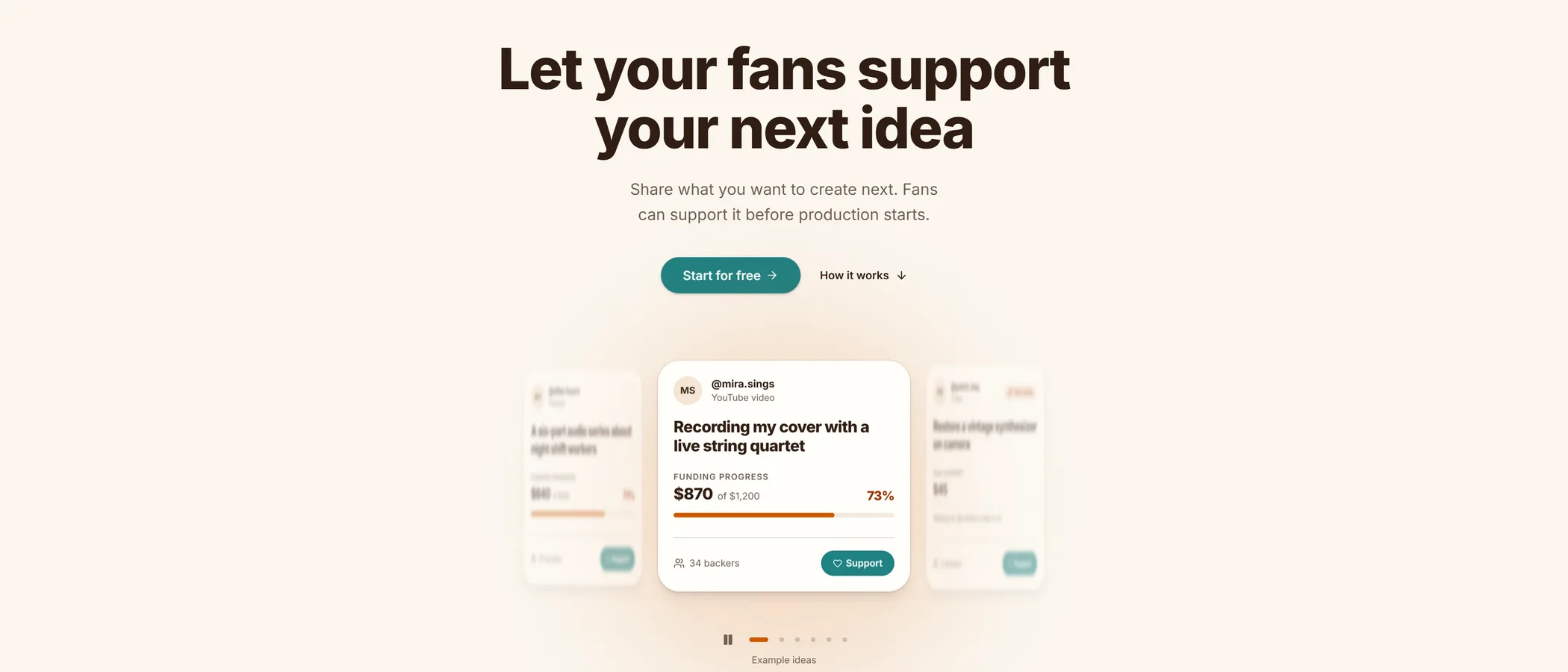
On Krinio, creators show what they want to make next and set a funding goal. Fans give an idea weight with a voluntary Support payment or suggest an idea of their own. The money goes straight to the creator's Stripe account. We are responsible for positioning, product design, development, SEO and the marketing videos.
- Project
- Krinio
- Industry
- Creator economy
- Type
- Web platform with payments
- Services
- Positioning, product design, full-stack development, SEO, video
Visible on Google before the platform is public
2,823
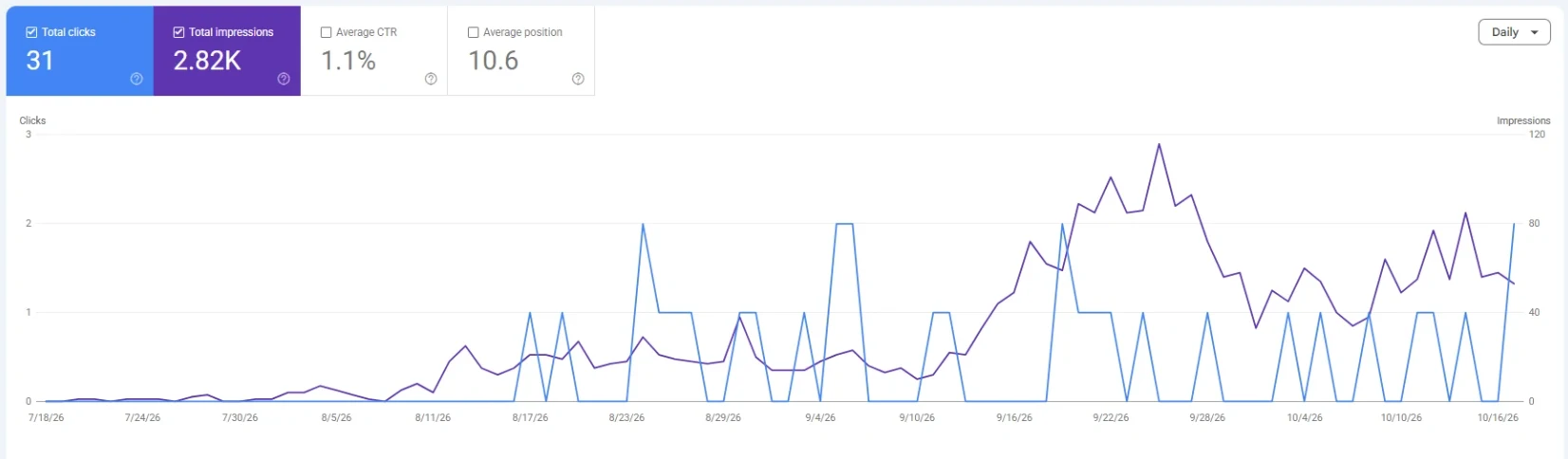
Google impressions in three months before the public launch, with 31 clicks and an average position of 10.6
5 languages
German, English, French, Spanish and Italian, with more than 900 prerendered pages
One team
strategy, design, code, legal copy alignment and videos without hand-offs between teams
The idea: see demand before anything is produced
An ambitious video takes days, sometimes weeks. Whether the audience cares about the topic only shows after the upload. Krinio reverses the order: the creator publishes the idea with a goal and a duration, and fans back it beforehand.
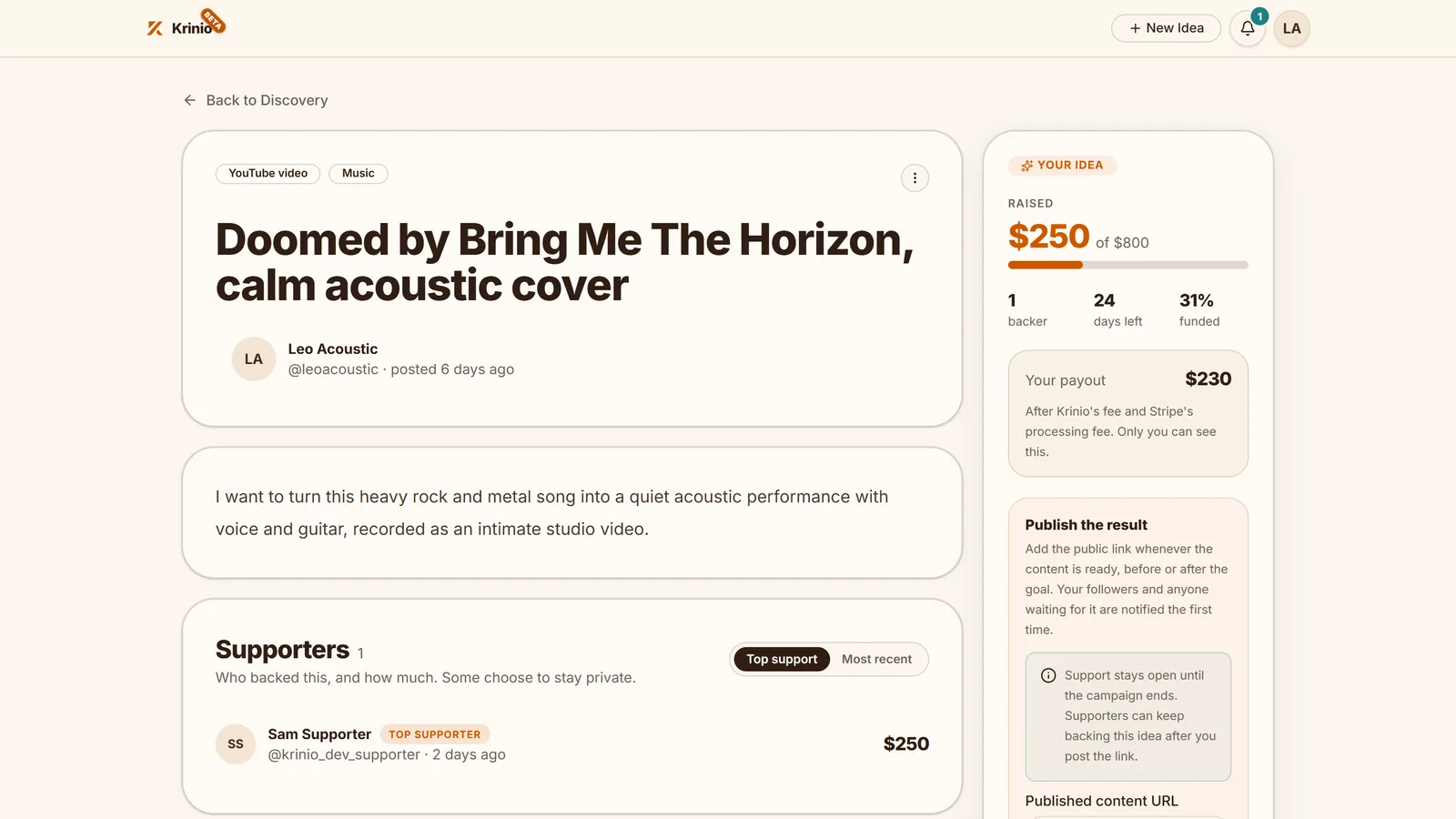
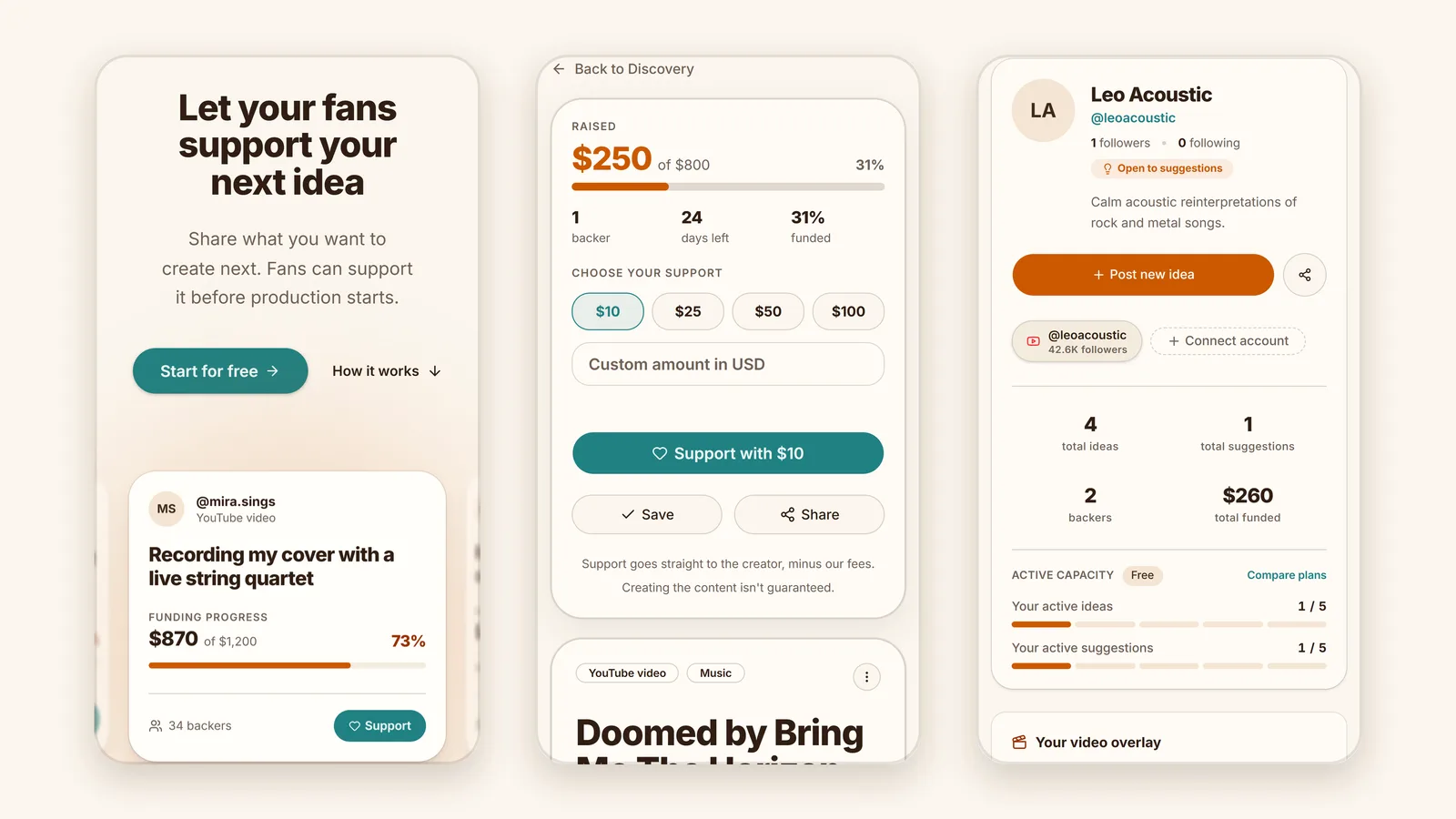
The idea page shows the Support total, the supporters and the days left at a glance. The creator also sees their payout after all fees and later posts the link to the finished video here. Everyone following the idea is then notified automatically.
Product design: a form that helps you pitch
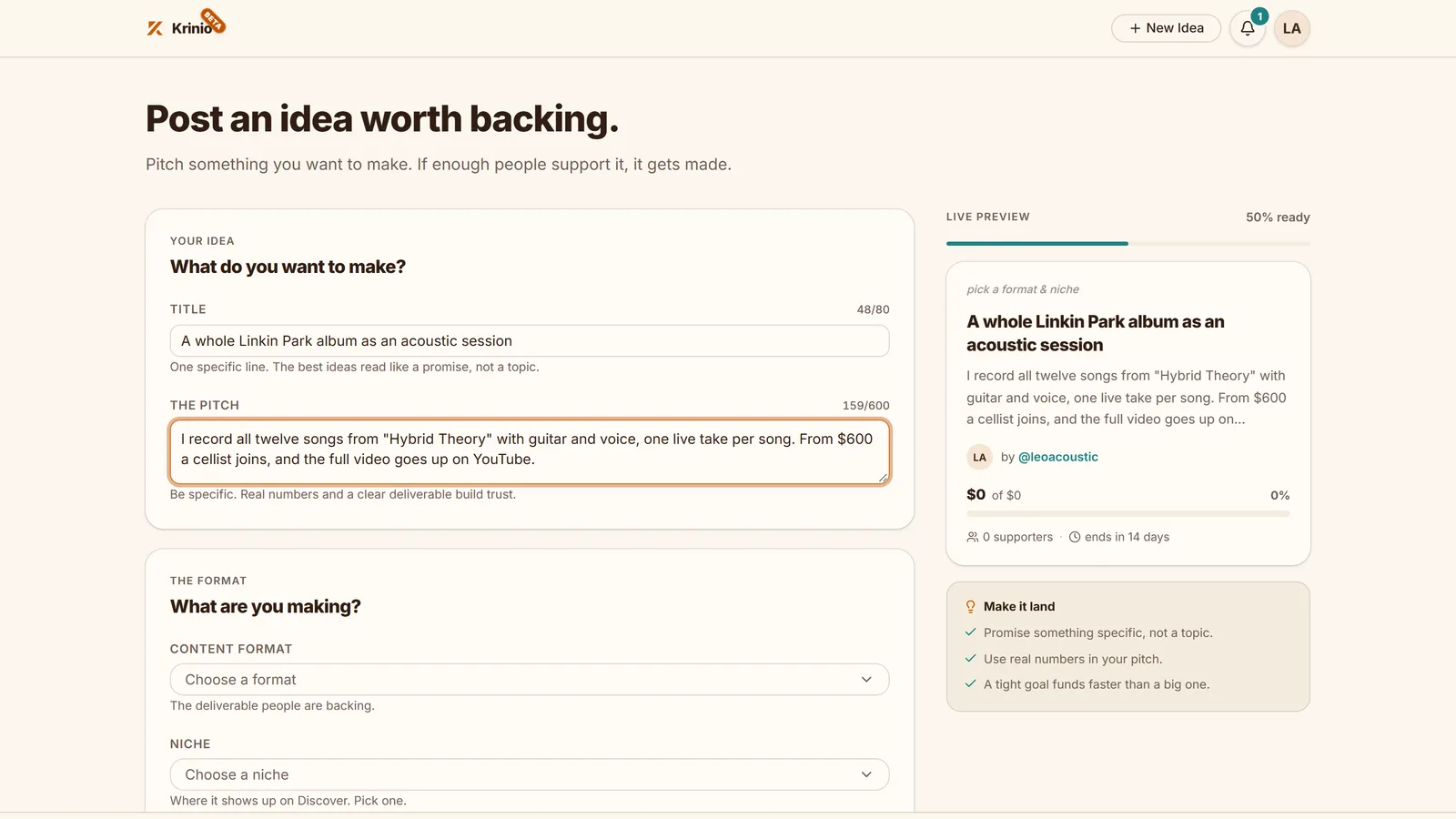
A good idea often fails because of a weak description. That is why the form is more than an input mask: a live preview shows the card exactly as it will appear in Discovery, and short tips lead to a concrete title and a pitch with real numbers.
The creator picks duration and goal from fixed tiers. Options outside their plan stay visible and explain which membership unlocks them. Interest in an upgrade appears at the moment it is needed.
Built for creators: profile, overlay and QR code
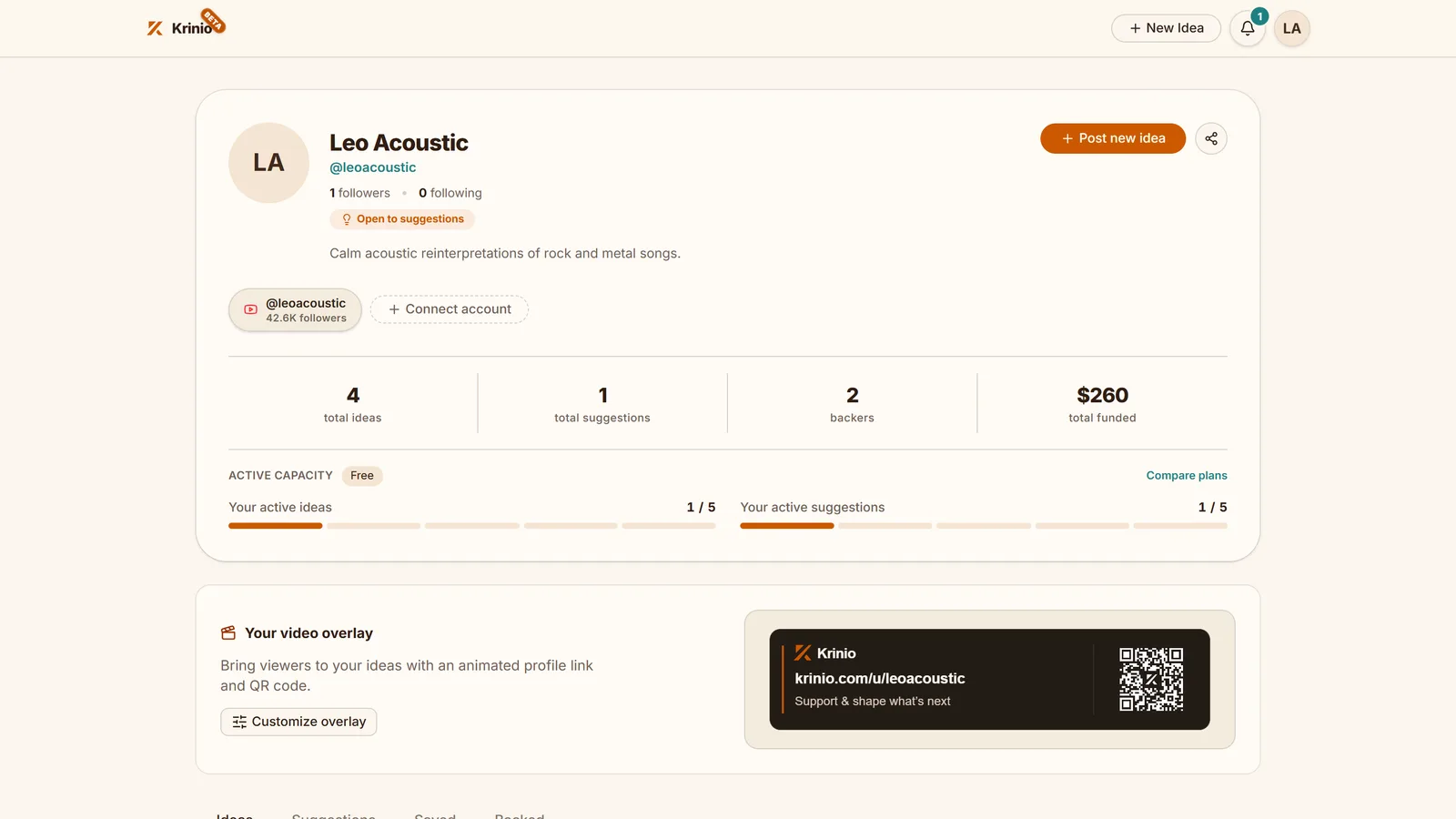
The profile brings together a creator's active ideas, their key figures and the capacity of their plan. With «Open to suggestions» they show that fans may send ideas of their own, each with a first Support payment.
To help viewers find Krinio, there is a video overlay: an animated profile link with a QR code that creators adjust right in the browser and export as a transparent video or with a green screen. Scanning it leads to all active ideas.
The technology: payments, data and security
Krinio moves real money. Support payments run through Stripe Connect straight to the creator's account, memberships through their own subscriptions. Every payment is confirmed and logged through webhooks, and failures are reported instantly via Telegram.
The data lives in Supabase with access rules per table. Creators connect their YouTube channel through Google, access stays read-only and the token is stored encrypted. We keep the privacy policy and terms in sync across all five languages with every change, following Swiss data protection law and the GDPR.
SEO before launch
2,823 impressions before the platform is public
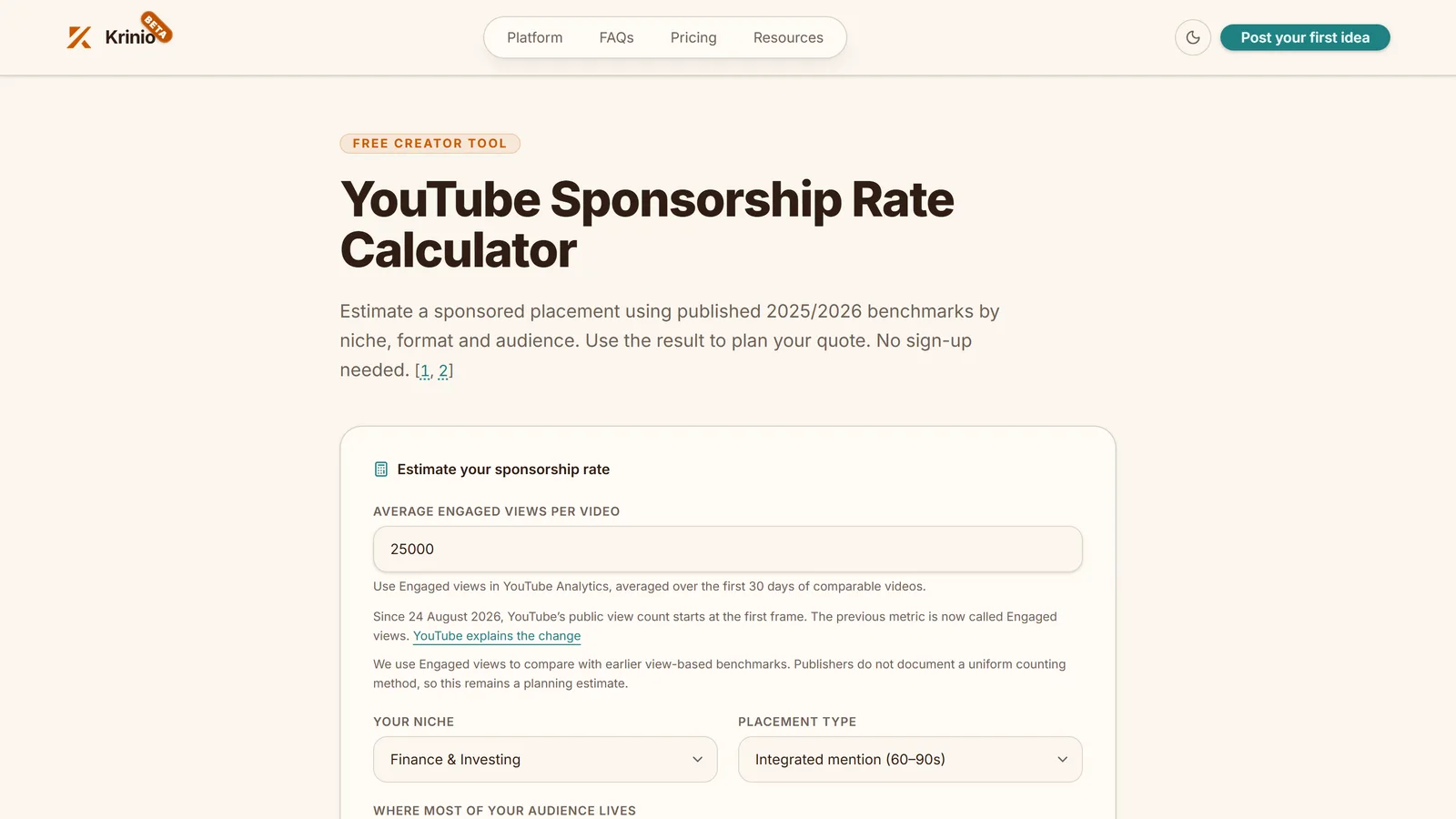
A new platform needs visitors before it has users. That is why we built a content hub alongside the product: guides, articles, pages for specific creator groups and free calculators, in five languages. Every page answers a concrete search from creators.
- 01
March 2026
The foundation
Positioning, data model and a dedicated design system. Mobile first and built for five languages from day one.
- 02
11 July 2026
Version 0.1.0
Waitlist with double opt-in, Google sign-in, Discovery, idea pages and the first SEO calculators, in all five languages.
- 03
August and September
A content hub in five languages
Guides, articles, creator pages and calculators for sponsorship rates, YouTube and Shorts earnings. In parallel: payments through Stripe Connect, memberships and the YouTube connection.
- 04
October 2026
Open beta prepared, Google already sends visitors
The platform is ready to launch and waits for a payment provider to confirm. Over the last three months Google has already shown Krinio 2,823 times in search results, and the waitlist keeps collecting interested creators.
Visibility that does not wait for the launch
Most platforms start from zero: only once the product is finished does the search for visitors begin. With Krinio both ran in parallel. While payments and profiles were being built, guides and calculators were already collecting impressions, with a clearly rising curve since August.
All content appears in five languages, with clean hreflang tags, structured data and statically prerendered pages. Search Console shows which countries and queries respond, and the next pages grow from there. That way the launch does not start from zero.
FAQ: developing web platforms
What is the difference between a website and a web platform?
A website informs and leads to an enquiry. A platform like Krinio runs processes: accounts, roles, payments, notifications and analytics. Instead of designing pages, you build a product that is tested and refined with every feature.
Does Movalanche handle design and development together?
Yes, that is the norm. For Krinio we are responsible for positioning, product design, the entire development, SEO and the marketing videos. The benefit: short paths, fast releases and a product from one mould.
How long does it take to reach a first usable version?
It depends on the core the first version has to carry. For Krinio, about twelve weeks passed between the first published version and the finished open beta. That is why we plan in stages: first the flow that proves the value, then everything that strengthens it.
Is SEO worth it before launch?
Yes, especially then. Google takes weeks to months to trust new pages. For Krinio we published guides and calculators early: in the three months before the public launch they added up to 2,823 impressions. Starting SEO only after launch gives away exactly this time.
What does it cost to develop a web platform?
Considerably more than a website, and the range depends heavily on the scope. That is why we start with a free initial call: we clarify goals, features and budget and estimate the costs together. This shows which core carries your project, what belongs in the first stage and what deliberately comes later.
Planning more than a website?
Whether it is a booking system, customer portal or your own platform: send us the essential details. We reply with a suitable first scope or a few focused questions.